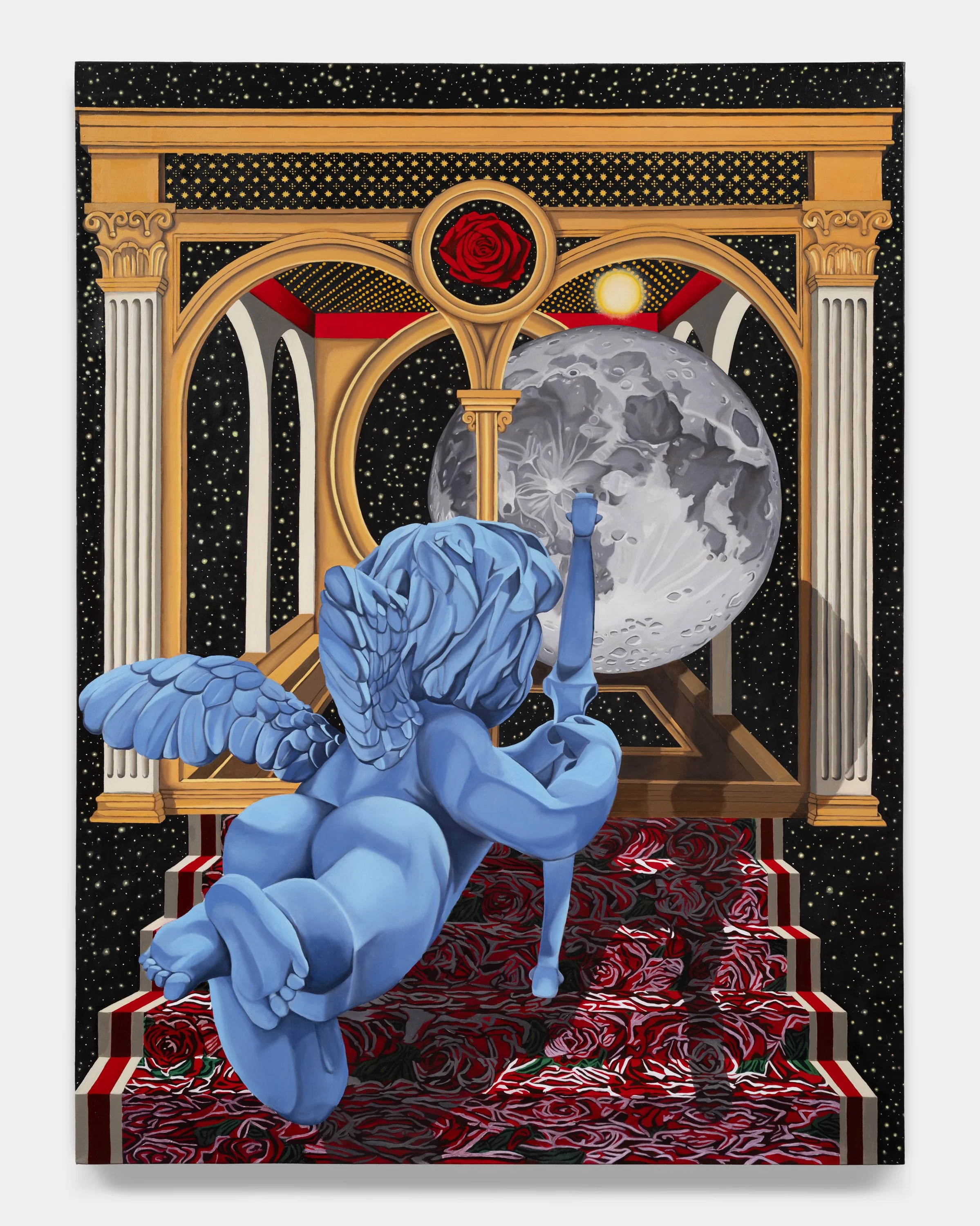
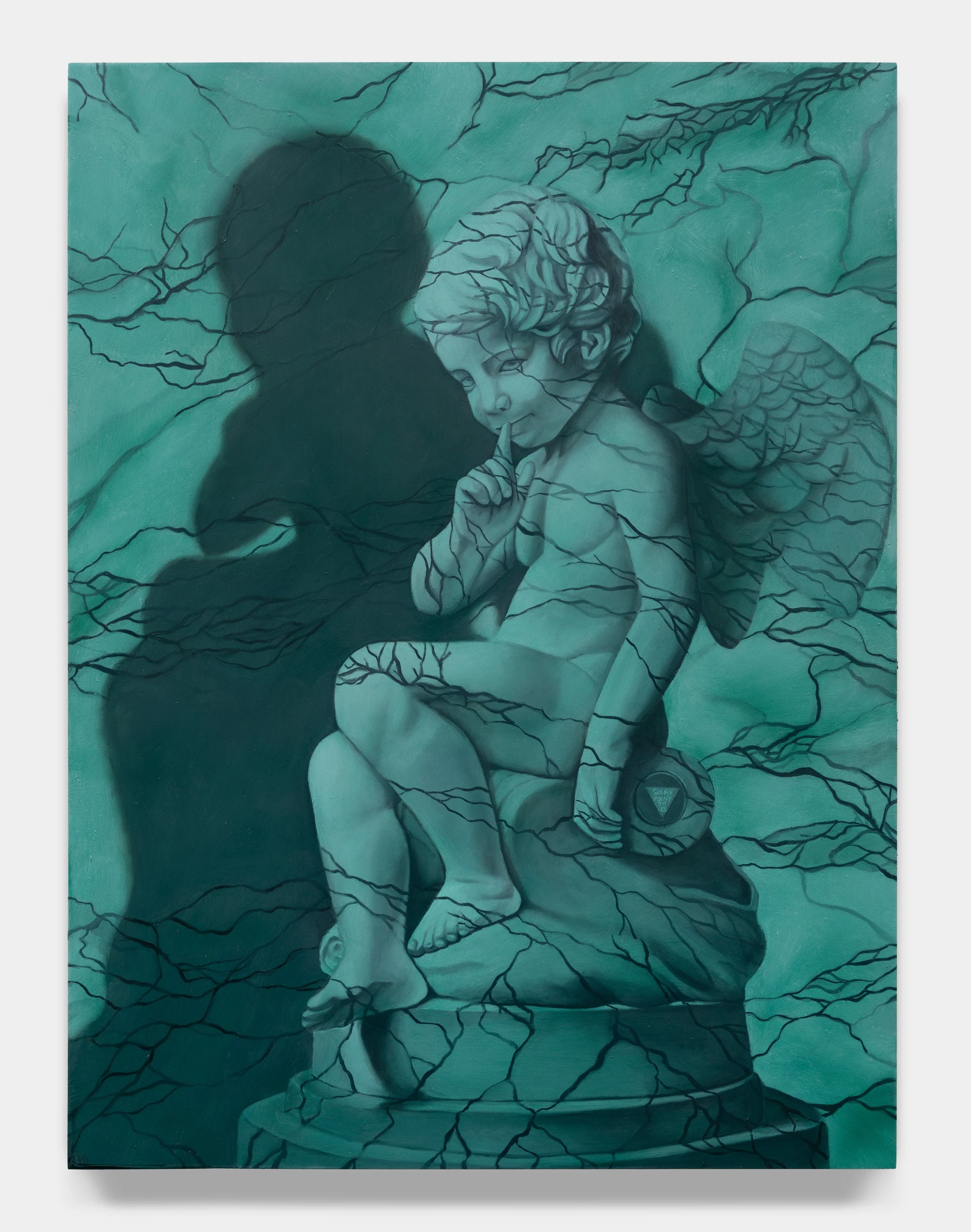
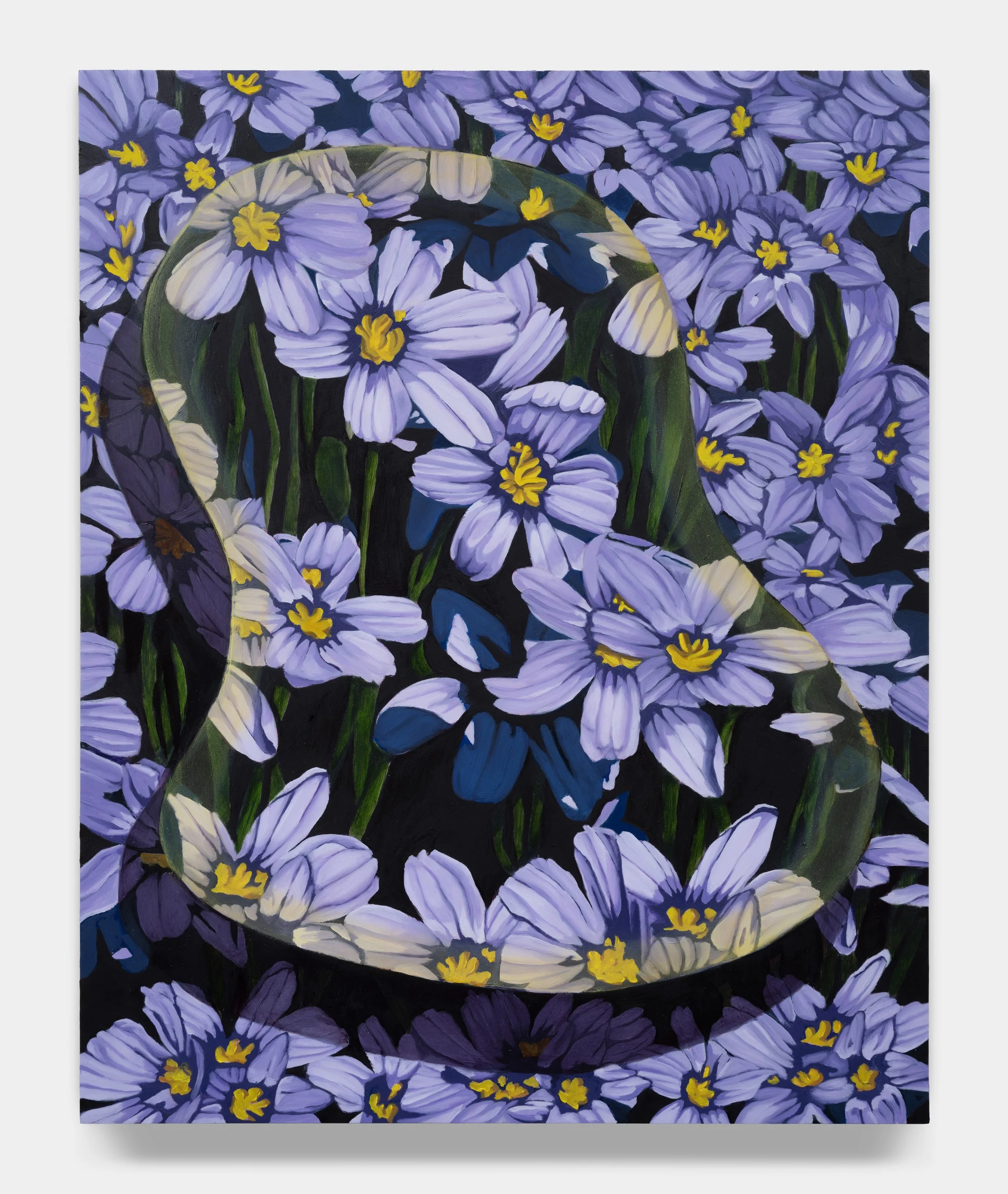
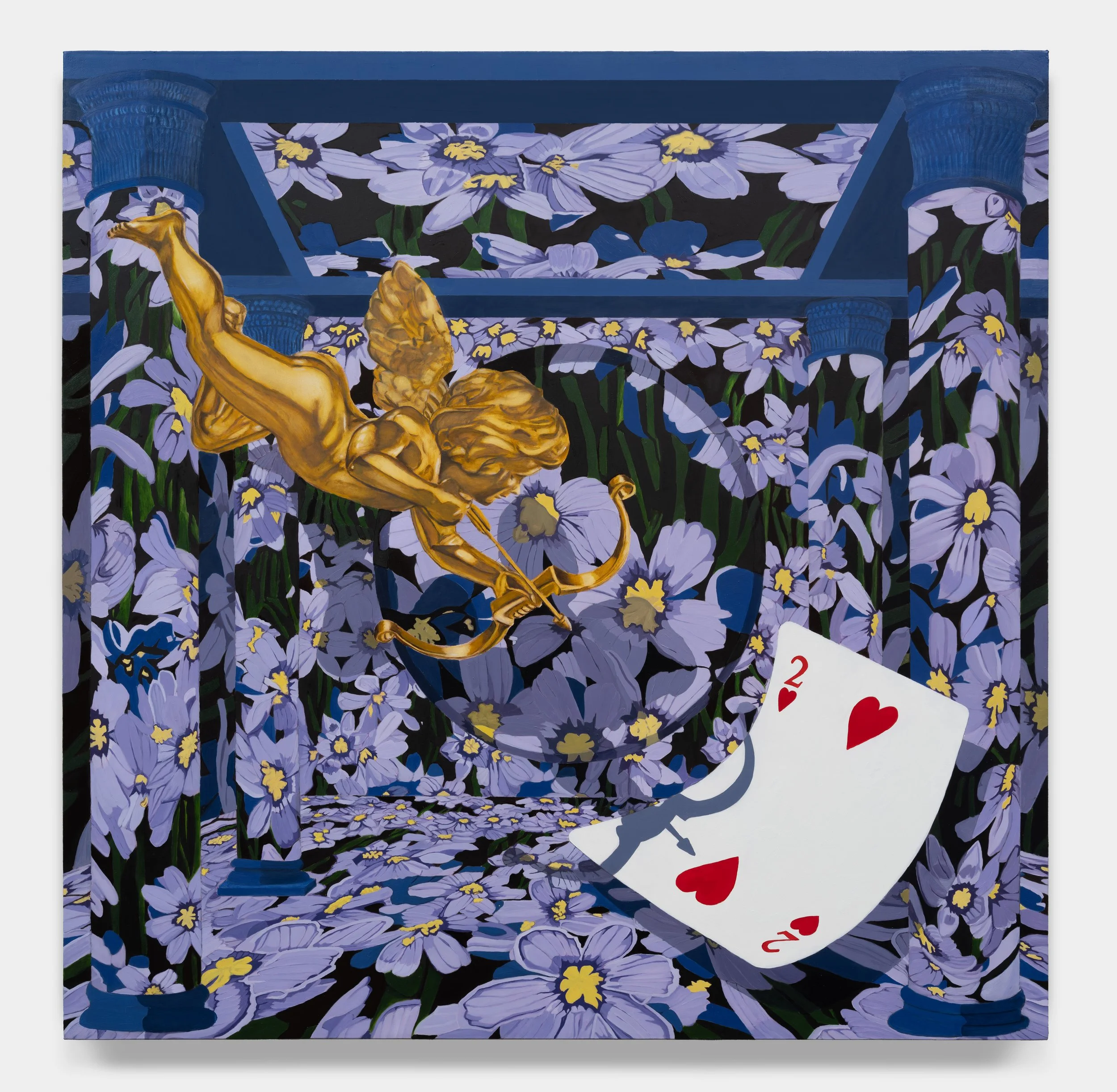
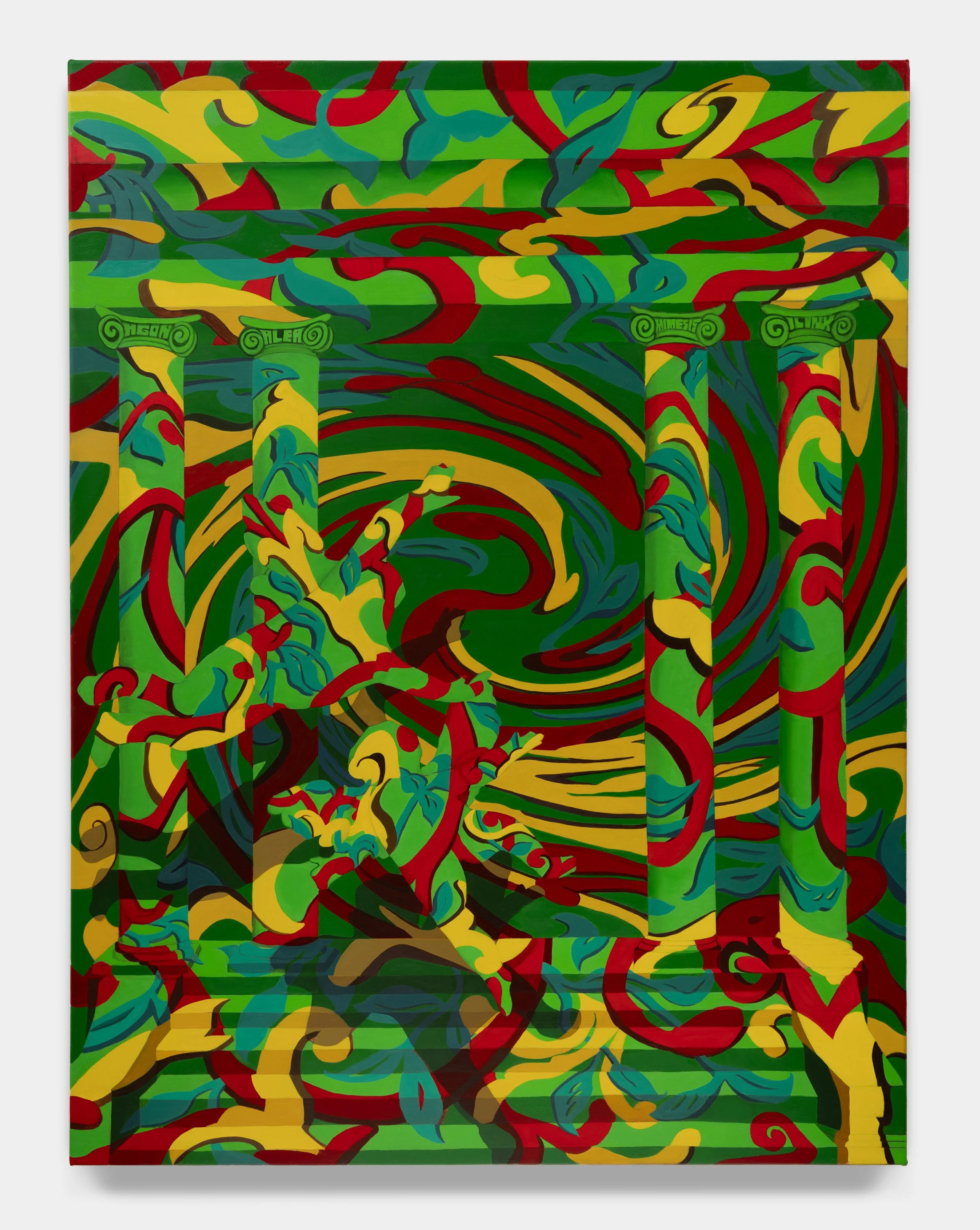
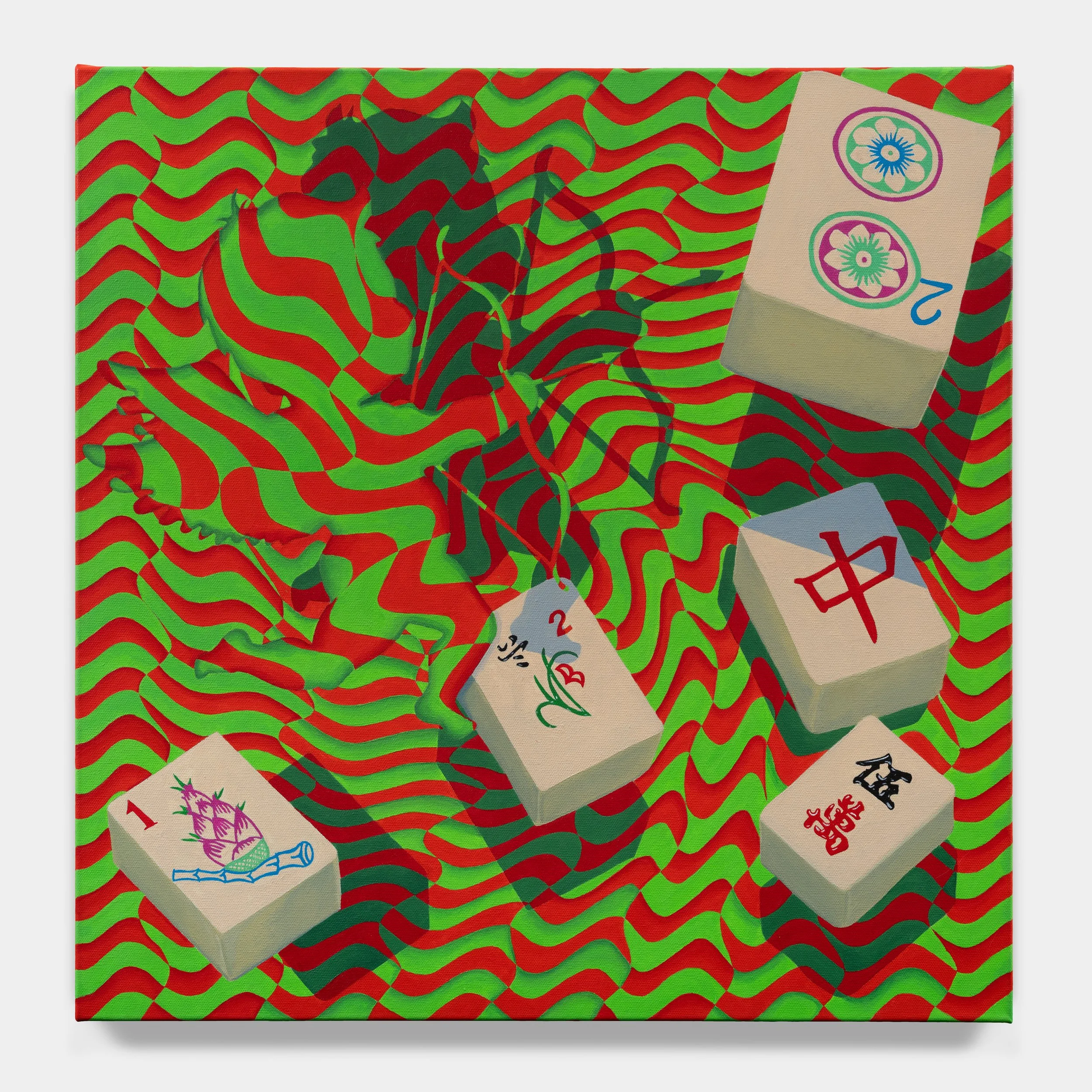
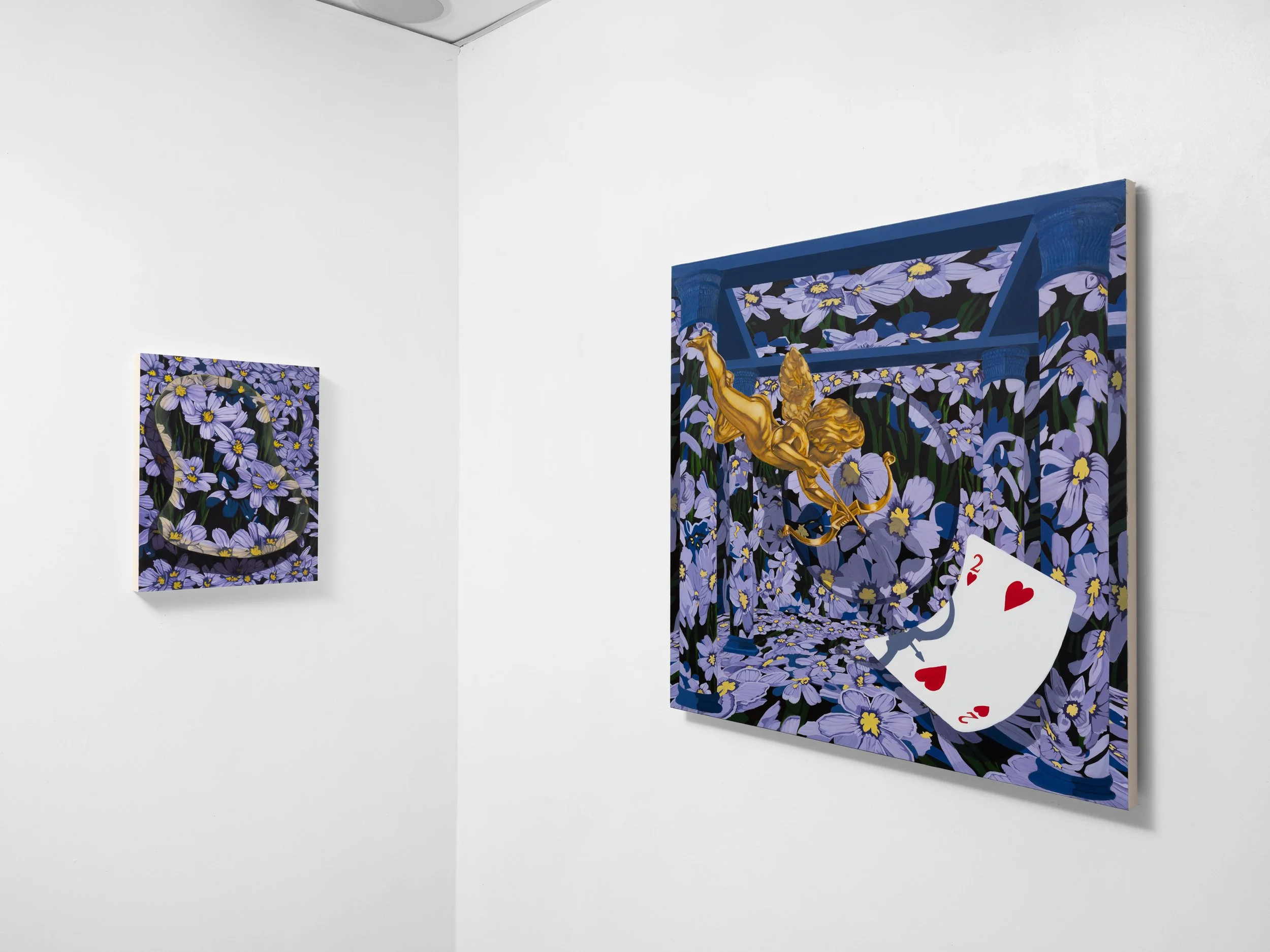
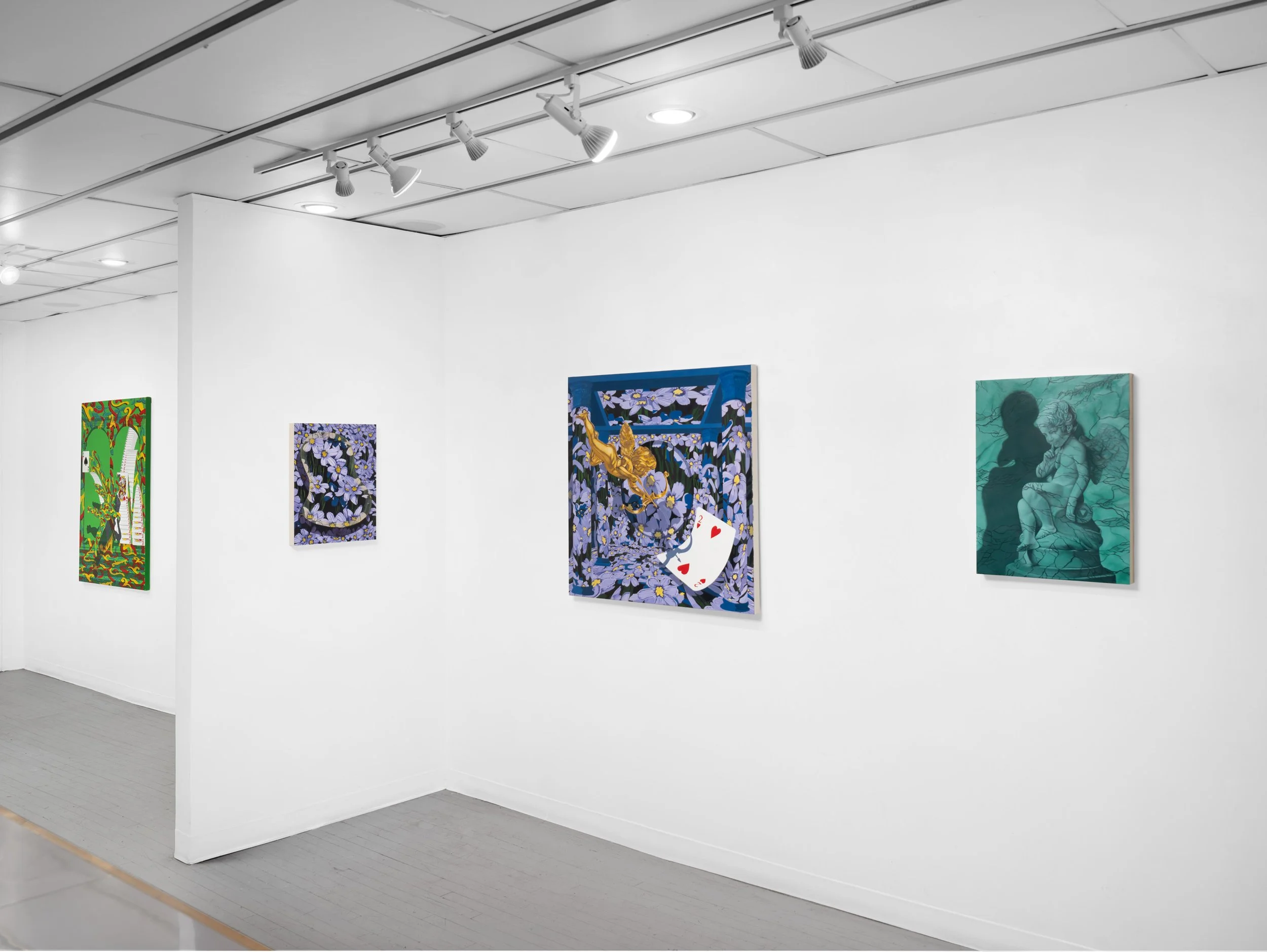
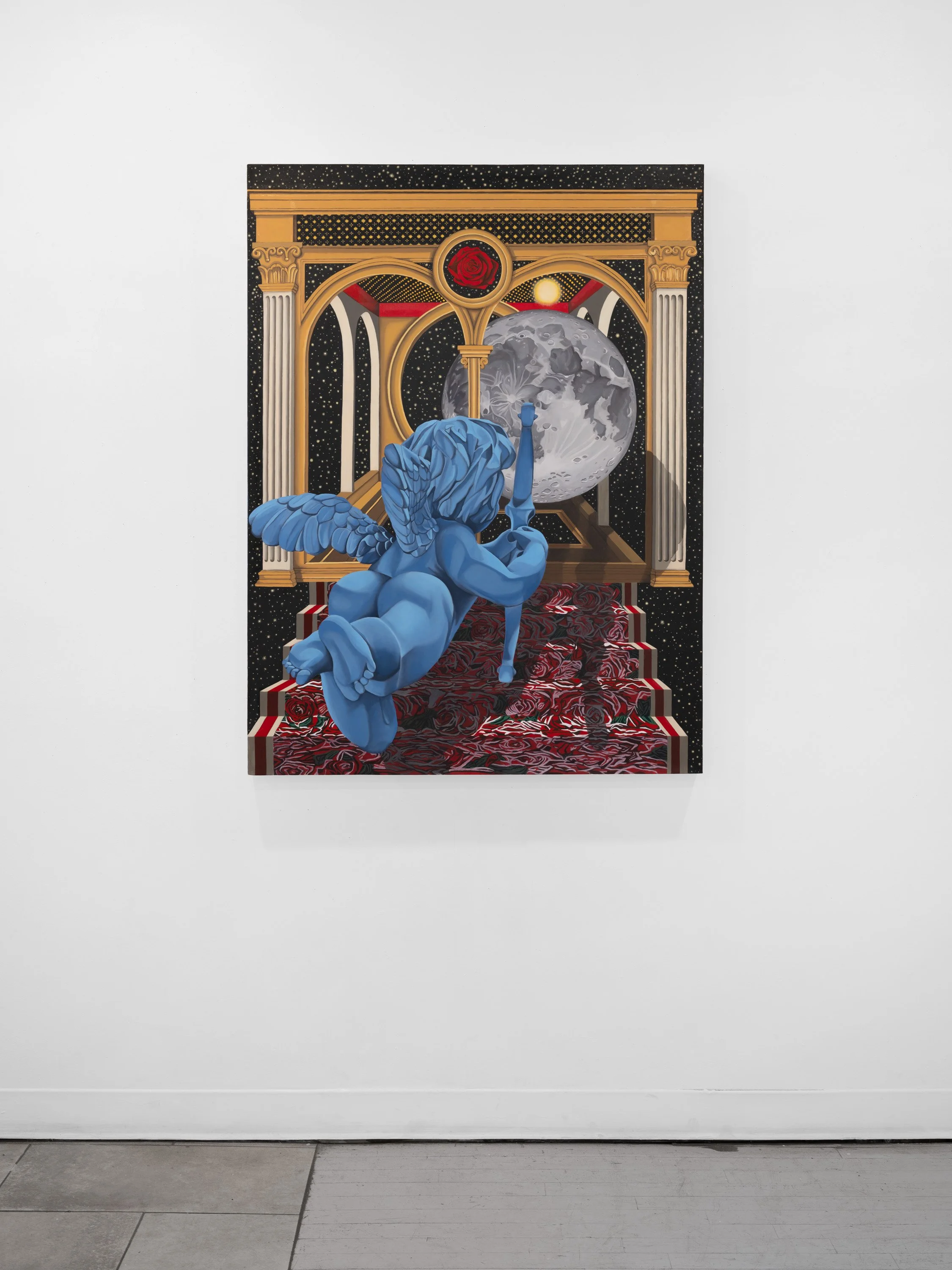
eri king’s solo exhibition, fingers crossed, stages Cupid, the god of desire, within illusionistic spaces where Classical architecture merges with the disorienting visual language of casinos. Across these paintings, desire is treated as something deliberately constructed through pattern, illusion, and spatial manipulation, linking historical techniques of visual persuasion to the scripted environments of contemporary consumer culture.
Artists of the Baroque and Renaissance periods used trompe l’oeil, heightened realism, and linear perspective to generate awe and spectacle, shaping viewers’ perceptions in ways that reinforced religious authority through carefully staged spatial experiences. Casinos operate through comparable strategies. Their kitschy patterned carpets, controlled lighting, and maze-like layouts are designed to stimulate attention, extend time spent within the space, and subtly influence behavior. By placing these systems into direct dialogue, this body of work exposes spectacle as a recurring mechanism of power that operates across both sacred and commercial contexts. Fragments of Renaissance architecture and appropriated cupids appear within dense fields of casino carpets, playing cards, mahjong tiles, and digital game symbols, where visual overload simultaneously produces stimulation and disorientation.
The exhibition title, fingers crossed, alludes to the moment of wishful thinking that accompanies desire, the hope that chance might turn in one’s favor even when reason suggests otherwise. This gesture connects practices of prayer, gambling, and play, reflecting a shared reliance on luck, fate, or divine intervention. Crossing one’s fingers becomes both an act of optimism and a surrender of agency, sustaining participation in systems structured around chance, risk, and reward.
These works consider how environments such as churches, casinos, malls, social media platforms, and games are designed to shape perception while preserving the appearance of free will. Cupid, the child of Aphrodite (goddess of love) and Ares (god of war), embodies a persistent tension between innocence and violence. His youthful, angelic form is inseparable from the bow and arrow that initiate desire, manipulation, and misdirection, becoming a metaphor for capitalism itself, where attraction and coercion coexist. Recast within spaces of spectacle, Cupid becomes the figure through which fingers crossed examines the psychological mechanics of choice, agency, and consumption, inviting viewers to reflect on how desire is cultivated within spaces designed to profit from it.